-
Provided by: SSKH-Pictures/shutterstock
Our travel guides are free to read and explore online. If you want to get your own copy, the full travel guide for this destination is available to you offline* to bring along anywhere or print for your trip.
*this will be downloaded as a PDF.Price
€4,95
Basilica of Santa Maria of Alicante
The guide was updated:The Basilica de Santa María, just a short 15-minute walk from the beach, is one of Alicante’s most significant landmarks. Due to its popularity with tourists, a small entrance fee is now required. Inside, the layout is designed for self-guided visits, with numbered stations and audio explanations available in three languages.
Built in the Valencian Gothic style between the 14th and 16th centuries on the site of a former mosque, the basilica is the oldest active church in Alicante. Its striking Baroque façade, spacious nave, and six chapels make it a highlight for anyone exploring the city.
Useful Information
- Address: Plaza Santa. María, 1, Alicante
- Website: www.basilicaalicante.com
- Phone: +34 681 14 04 83
- Email: basilicaalicante@procuratiocultural.com
Digital Travel Guide Download
Our travel guides are free to read and explore online. If you want to get your own copy, the full travel guide for this destination is available to you offline* to bring along anywhere or print for your trip.
*this will be downloaded as a PDF.Price
€4,95
The Basilica de Santa María, just a short 15-minute walk from the beach, is one of Alicante’s most significant landmarks. Due to its popularity with tourists, a small entrance fee is now required. Inside, the layout is designed for self-guided visits, with numbered stations and audio explanations available in three languages.
Built in the Valencian Gothic style between the 14th and 16th centuries on the site of a former mosque, the basilica is the oldest active church in Alicante. Its striking Baroque façade, spacious nave, and six chapels make it a highlight for anyone exploring the city.
Read more
Teatro Principal de Alicante
Alicante’s Main Theatre is a neoclassical building that first opened its doors in 1847. Its interior follows the Italian style, divided into three distinct sections: the vestibule, the horseshoe-shaped auditorium and the stage. The theatre has capacity for 1,072 seats.
You can either join a guided tour free of charge or attend a play or concert. For details on tours and the programme, it’s best to check the official website. The theatre enjoys a central location, just a short walk from the popular Santa Creu neighbourhood.
Read more
Castell de Santa Bàrbera
A visit to the Santa Bárbera Castle is highly recommended. Located atop Mount Benacantil, at a height of 166 metres, it is one of the largest medieval fortresses in Spain, with unbeatable views over the Bay of Alicante and on clear days you can see all the way to Tabarca Island.
Such is its relevance that during the 20th century it was declared a Monument of Historic and Artistic Importance and a Site of Cultural Interest. Here we can also find one of the most characteristic images of the city, a rock formation resembling a man’s profile on the southwestern slope, known as the Moor’s Face, which is best viewed from Postiguet Beach. The Museum of the city in Santa Bárbara's Castle 'MUSA', housed in the Castle itself, was included in its cultural offer and it explains in five theme rooms the history of the city of Alicante and their inhabitants.
To descend down from the Santa Bárbara Castle, take the route through Parque de La Ereta, along the mountainside. Its location and views transform it into a place of relaxation as well as a great meeting place. It also has a spectacular restaurant and, on the way down to the old town quarter, you can visit the picturesque, quintessentially Spanish Santa Cruz district. Another attractive option between the castle and the Santa Cruz district is walking along the remains of the walls that surrounded the Castle, which now end in the Santa Cruz district.
You can also access the castle via a lift built within the rock face opposite El Postiguet beach.
Read more
Barri Vell Santa Creu — Old Town Quarter
No trip to Alicante would be complete without a stroll through El Barri Vell, the city’s charming Old Quarter. Its maze of narrow streets lies beneath the Santa Bàrbera Castle and is filled with taverns, small shops and local life.
Among its most notable landmarks is the San Nicolás Co-Cathedral, an example of 17th-century architecture, though its cloisters date back to the 15th century in Herrerian Renaissance style. Other highlights include the Town Hall, an elegant 18th-century Baroque building, the Santa María Basilica, the Museum of Contemporary Art, and the Casa de la Asegurada Museum.
Read more
El Castell de Guadalest
El Castell de Guadalest is one of the most beautiful villages in Spain. Having a stroll through the streets of the village is a real pleasure. San José Castle, Orduña house, the bell tower and the unusual museums will attract your attention.
If you like walking in the mountains, El Castell de Guadalest is the perfect place to be in contact with nature and if you are a gastronomy lover, our restaurants offer a combination of traditional dishes and the latest innovations.
Read more
Castell de Sant Ferran
If you’ve already explored the popular Santa Bárbara Castle but are still looking for views of Alicante, especially at sunset, make your way to Sant Ferran Castle. Located within Doctor Rico Park and next to Del Tossal Park, this historic fortress is far less crowded than other city viewpoints, making it an ideal spot for a picnic or a quiet break on a bench with a drink and some snacks.
Its peaceful atmosphere is part of the charm, but keep in mind there are no shops or vendors nearby, so it’s best to bring everything you need before starting the climb.
Read more
La Casita de las Macetas Azules
La Casita de las Macetas Azules is a charming little house in the Old Quarter, instantly recognisable by the blue flower pots that cover its façade. Often overlooked by tourists who stick to the main streets, it is one of Alicante’s hidden gems.
Reaching it involves climbing a set of steps that eventually lead up towards Santa Bàrbera Castle. The spot is particularly popular for photos with a colourful backdrop and a glimpse of local character.
Read more
Civil War Anti-aircraft Shelters
Alicante still bears witness to the bombings it endured during the Spanish Civil War, with several preserved air-raid shelters dotted across the city. Some of these have been restored and now feature displays of artefacts, photographs and explanatory texts that provide insight into the historical and social context in which they were built and used between 1936 and 1939.
The best known of these shelters is found in Plaza de Séneca, where a fully restored site now forms part of the 'Centro de Interpretación Sobre los Refugios Antiaéreos'. Another, just a short walk away in Plaza Dr. Balmis, stands out for its submarine-style doors, designed to seal off gases and protect those inside.
If you want to explore more than just one of these historic spaces, the municipality runs guided tours that cover several shelters around Alicante. These tours are detailed, engaging and very reasonably priced.
Read more
Parks
Alicante boasts a number of parks where you can escape the bustle of the city and enjoy some fresh air.
La Ereta Park lies on the slopes of Mount Benacantil, just below Santa Bárbara Castle and opposite El Postiguet Beach. From here, you’ll be rewarded with some of the best panoramic views of Alicante, as well as a scenic route that leads from the summit down into the city’s historic quarter.
El Palmeral Park, located a little further from the centre, is one of Alicante’s most striking green spaces. This palm-filled park features lakes, ponds and artificial streams, along with sports facilities and a cross-country cycling track. A pavilion hosts a lively programme of events throughout the year, including children’s theatre and puppet shows.
Closer to the city, Canalejas Park is around a 20-minute walk from La Ereta. It is one of Alicante’s oldest and most traditional public gardens, home to lush greenery and impressive century-old rubber trees that soar up to 20 metres high.
Finally, Gabriel Miró Square—although not a park—offers a peaceful, leafy retreat just a few steps from the Explanada and the seafront promenade. Dedicated to the Alicante-born writer, it features a fountain monument and grand old trees, creating a charming, shaded spot for a quiet break.
Read more
Esplanada de Espanya
Explanada de España is one of the city’s emblems. It runs parallel to one of the port wharfs and is lined on both sides with rows of palm trees. The floor is decorated with approximately 6.6 million tricolour marble tiles forming a design with a characteristic wave effect mosaic.
Visitors and locals alike can enjoy these areas at any time of the year, thanks to the pleasant climate. Throughout the year there are workshops, entertainment, children’s theatre, puppet shows, etc. predominantly aimed at children and families.
Read more
Nova Tabarca Island
A visit to Tabarca island is an absolute must for everyone. Boats from the company Kontiki depart from the marina in Alicante several times a day during the summer months. In low seasons it is better to confirm timetables beforehand.
The journey takes around one hour from Alicante. The route will give you the opportunity to enjoy the coastline.
Try one of the traditional fish stews on the terrace of one of the restaurants. Also, on the island, you will find nice little bays to swim in, as well as a beach offering different facilities. If you decide to stay overnight on the island, there are also little hotels peppered along it.
Read more
TuriBús
For those who want to have a general idea of Alicante, or for those with less time, Alicante offers a special service — the TuriBús — a bus through the city with 12 interesting stops for holidaymakers. The sights and sites are explained in Spanish, Valencian, English, French, German and Italian.
The service operates between March and December.
Read more
MACA Museum
The Contemporary Art Museum 'MACA' is housed in the city’s oldest surviving civil building. In the baroque style, it dates back to 1685 and is located next to the Santa María basilica. The museum was re-opened after a year of an extension work in order to improve and enlarge its facilities, with the aim to house an important collection of 20th century art mostly composed of works donated by Eusebio Sempere. Many different types of events also take place in this Museum.
Read more
Hogueras Museum
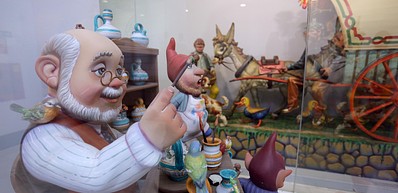
Museo De Las Hogueras, Bonfire museum, is dedicated to the most popular 'fiesta' in Alicante. It shows the 'ninots', or wooden statues that were not burned during the celebration. In a video room you can see the best of this festival, photographs, costumes, etc. This museum is especially nice for families with children.
Read more
Archaeological Museum of Alicante — MARQ Museum
Created in 1932, MARQ Museum was originally located on the ground floor of the Provincial Council building on Avenida de la Estación in Alicante. In 2002 it was transferred to the former site of the San Juan de Dios Provincial Hospital.
If you visit this highly innovative and visual museum, you can enjoy an avant-garde approach to archaeology supported by modern audiovisual techniques. Its exhibits stretch from the Palaeolithic age to Contemporary Modern Culture.
Read more
Gravina Museum of Fine Arts — MUBAG
The Gravina Museum of Fine Arts occupies the 18th century Gravina Palace, which once belonged to the Count of Lumiares and housed the Provincial Archives. It exhibits works owned by the Provincial Council of Alicante, with collections comprising works of art created in Alicante from the Middle Ages to the early 20th century.
Read more
Central Market
This building contains some modernist features and was built between 1911 and 1912 under the management of Juan Vidal Ramos over Balmes Square.
With its rectangular shape, the Market mimics the layout of a basilica, with a circular appendix on the South-west side covered by a semispherical dome called 'La Rotonda', the roundabout. The building is split into two floors, one of which is a semi-basement due to the irregular surrounding streets.
The front of the building was designed by Enrique Sánchez Sedeño and is presided by an impressive staircase surrounded by two emerging figures with decorative features.
On 25th May 1938, the Mercado Central was hit during the worst bombing suffered by the city of Alicante during the Spanish Civil War, which resulted in 300 civilian victims. The Italian air force was responsible for that tragedy.
All kinds of high-quality products can be bought at the Market, especially local fish and seafood, vegetables and fruit, as well as other typical local products. That is why the city’s top restaurants source their food from the Mercado Central.
Read more
Aquopolis Torrevieja
In Aquopolis Torrevieja, you will find attractions for everyone: if you want an adrenaline rush, slide down in High Emotion. Speed, a water slide, is designed for adrenaline lovers, which will appeal to both adults and children. All children under 10 years will have fun in the Kids Zone, MiniPark and Charmed Lake. Have a relaxing time with your family in our Sand Beach or at The VIP Area.
The park opens seasonally from June to early September.
Read more
Terra Natura Benidorm
Terra Natura Benidorm is a nature and animal park which has more than 1,500 animals of 200 different species, some of them are in danger of extinction. Its surface is divided into four areas representing the continents of America, Asia and Europe, and the area of Pangea, inspired by the origin of the Earth. The tour through its facilities will make you immerse yourself in the concept of zooimmersion and otherness.
Read more
Hogueras de San Juan
This is the city’s most important celebration, beginning on the 19th June until the 29th. It is a festival dedicated to fire.
The Hogueras de San Juan include one of the most important bullfighting events in Spain. Once the main celebrations are over, there is a fireworks competition on Cocó beach at the far end of Postiguet beach, every night until the feast day of Saint Peter on 29th June.
Read more
Moors & Christians
The traditional Moros y Cristianos fiestas take place in different neighbourhoods of Alicante throughout the year. They recreate, in a lively and festive way, the battles between Christians and Muslims during the 13th-century reconquest of the province. Each district celebrates on its own dates, with events spread across the calendar, for example, the San Blas district in July and Altozano in August, among others.
Read more