• Young man and woman are looking through window at airport dreamingly. They are carrying luggage and holding hands
    Provided by: Olena Yakobchuk/Shutterstock

Our travel guides are free to read and explore online. If you want to get your own copy, the full travel guide for this destination is available to you offline* to bring along anywhere or print for your trip.​

*this will be downloaded as a PDF.

Price

€4,95

Purchase
Passport & Visa

Passport & Visa

Starting from January 8, 2025, the United Kingdom has introduced an Electronic Travel Authorization (ETA) requirement for visa-exempt travellers. Initially, this applies to citizens from countries such as the United States, Canada, Australia, Japan, and others. From April 2, 2025, this requirement will extend to European Union (EU) and European Economic Area (EEA) citizens, including those from Iceland, Liechtenstein, Norway, and Switzerland. The ETA permits short-term visits of up to six months for tourism. Travellers must apply for the ETA online or via a mobile app before their trip. The process involves providing personal details, passport information, and answering a series of questions. The ETA costs £10 and is valid for two years, or until the passport expires, whichever comes first. Most applications are processed within three working days, but it's advisable to apply well in advance of travel. However, those travellers planning to work or study in the UK for more than six months will need to obtain the appropriate visa. It's essential to consult the UK Government's official website to understand the specific requirements and to ensure a smooth journey. Please note that the ETA does not guarantee entry into the UK; border officials retain the authority to grant or deny admission upon arrival.
Read more
Best Time to Visit

Best Time to Visit

London is graced with a mild climate and, as such, can be visited at any time of the year. However, a few things need to be considered. Most of the royal palaces and residences, like the State Rooms at Buckingham Palace, are only open to the public during the summer months. Many of the city's most important festivals, like the British Summer Time Music Festival, also take place during this time. Late June to mid July is also when some of the best sales are on in shops around the capital. Spring is also a good season for a visit, since the weather is generally good and finding accommodation is both easier and cheaper (high season in London means a lot of tourists). And if you're not too bothered about the grey weather, then the low season (January and February) can be a good option too, when there are fewer tourists and prices are lower.
Read more
London Heathrow Airport (LHR)

London Heathrow Airport (LHR)

London Heathrow Airport is one of the world’s busiest airports, with five terminals. There are various ways to travel from Heathrow Airport to your destination. The quickest option is the Heathrow Express, a non-stop train to Paddington Station taking around 15–20 minutes, with services every 15 minutes. For a cheaper option, the Piccadilly line of the Tube links the airport to central London in roughly 45–55 minutes. Coaches and taxis are also available, though journey times can vary with traffic.
Read more
London Gatwick Airport (LGW)

London Gatwick Airport (LGW)

London Gatwick Airport, the UK’s second-largest airport, has two terminals: North and South. The fastest way into central London is the Gatwick Express, a non-stop train to Victoria Station taking around 30 minutes, with departures every 15 minutes. Other options include Thameslink and Southern train services, which stop at several central London stations, as well as coach services to Victoria and other locations. Taxis are available, but they can be quite pricey depending on traffic.
Read more
London Stansted Airport (STN)

London Stansted Airport (STN)

London Stansted Airport is the UK’s third-busiest airport, serving numerous low-cost airlines across Europe and the Mediterranean. The fastest route into central London is the Stansted Express, a direct train to Liverpool Street Station in less than one hour, with services departing every 15 minutes. Other options include National Express and Terravision coaches to Victoria, Stratford, and other locations. Taxis are available, but fares can be high due to distance and traffic.
Read more
London Luton Airport (LTN)

London Luton Airport (LTN)

London Luton Airport is located about 56km north-west of central London, and is a popular base for low-cost airlines. The easiest way into the city is via a shuttle bus to Luton Airport Parkway station (around 10 minutes), where trains run frequently to central London in roughly 25–35 minutes. Alternatively, express coach services such as easyBus, Green Line 757, and Terravision operate to Victoria Coach Station. Taxis are also available, though fares can be significantly higher depending on traffic.
Read more
Public Transport — Bus

Public Transport — Bus

London’s bus network covers the entire city and is often the most convenient way to travel short distances or reach areas not served by the Tube. Buses run frequently throughout the day and are fully accessible. Cash is no longer accepted on London buses. Instead, you pay by tapping an Oyster card or a contactless debit or credit card when boarding. There’s no need to tap out. Fares are flat regardless of distance, and daily and weekly caps apply automatically. A popular option for visitors is the Hopper fare, which allows unlimited bus and tram transfers within one hour for a single fare. Night buses operate across much of the city, providing overnight connections after the Tube closes. Many routes pass through central hubs such as Trafalgar Square. Routes and timetables are best checked using Transport for London’s Journey Planner and the TfL Go app. Concessions are available for children, students, seniors, and disabled travellers.
Read more
Public Transport — the Tube

Public Transport — the Tube

London’s Underground, commonly known as the Tube, consists of 11 lines serving Greater London and connecting with the Docklands Light Railway (DLR) and local rail services. Trains typically run from around 5 am until midnight, Monday to Saturday, with a reduced service on Sundays. On Friday and Saturday nights, selected lines operate a Night Tube service, offering limited overnight travel. Fares are based on London’s zonal system and are cheapest when using an Oyster card or a contactless debit or credit card; paper tickets are expensive and now rarely used. Daily and weekly fare caps apply automatically, helping to keep costs down. Free Tube maps are available at many stations, while routes can be planned using Transport for London’s Journey Planner, the TfL Go app, or third-party apps such as Google Maps and Citymapper.
Read more
Public Transport — Docklands Light Railway

Public Transport — Docklands Light Railway

The DLR serves East London and links with the Tube network at key stations including Bank, Tower Gateway, Shadwell, Stratford, Bow, Heron Quays, Canning Town, and Canary Wharf. It also connects to the Emirates Air Line cable car at Royal Victoria. Fares follow the same zonal system as the Tube, and the DLR accepts Oyster cards, contactless payment cards, and Travelcards covering the relevant zones. Trains typically run from around 5:30 am to 12:30 am Monday to Saturday, with a slightly shorter service on Sundays (7 am–11:30 pm).
Read more
Public Transport — Thames River Bus

Public Transport — Thames River Bus

Glide along the Thames on the river bus, a scenic way to reach destinations along the river from Putney to Woolwich Arsenal. Key routes include the Thames Clippers service between Hilton London Docklands Riverside and Canary Wharf, the Tate-to-Tate connection between Tate Britain and Tate Modern, and the route linking the London Eye with Greenwich. Tickets can usually be purchased on board or in advance online. Oyster cards and contactless payment cards are also accepted, often with discounted fares compared to cash tickets.
Read more
Public Transport — Local Trains

Public Transport — Local Trains

London’s local train network complements the Tube, linking the city to surrounding towns and regions while connecting with major Underground stations. Operators include London Overground, South Western Railway, Southeastern, Southern, and Greater Anglia, among others. Many services also tie into the national rail network and the Eurostar. Oyster and contactless payment cards are valid on most trains within Zones 1‑9, with a few exceptions such as the Heathrow Express.
Read more
Public Transport — Cycle Hire Scheme

Public Transport — Cycle Hire Scheme

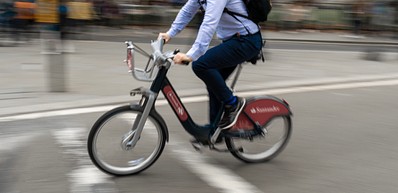
Zip around London on the city’s public bike-sharing scheme, commonly known as 'Boris Bikes'. Red bikes are available at hundreds of docking stations across the capital, making it easy to pick one up or return it nearby. Bikes can be hired via the Santander Cycles app or at the docking stations themselves. The scheme is ideal for short trips, with time-based charges applying after the first half hour. Docking stations clearly indicate where bikes are available.
Read more
Pharmacy

Pharmacy

Whether you need over-the-counter remedies or to fill a prescription, London has no shortage of pharmacies. Boots remains the most widespread and reliable chain, with branches throughout the city offering medication, health services, and everyday essentials. Superdrug is another common chemist's chain, particularly in central areas and shopping districts. In addition, smaller chains such as Well Pharmacy and Rowlands Pharmacy operate a limited number of locations in selected neighbourhoods.
Read more
Frequently Asked Questions about London (FAQs)

Frequently Asked Questions about London (FAQs)

FAQ – What is the best way to explore London? London is a very walkable city, and exploring on foot is one of the best ways to experience its streets, parks, and hidden corners. Public transport makes getting further afield easy: buses, the Tube, the Overground, and the DLR all connect the city. For a different perspective, river buses along the Thames provide scenic views and a quieter way to travel. Comfortable shoes, rain protection, and sun cream are highly recommended. An Oyster card or contactless payment card is the most convenient way to pay for fares across all TfL services. – How many days in London is enough? While you can see most of the main bucket list sights in London in a couple of days, spending at least 3-4 days in London is the best way to do this incredibly diverse city justice. You’ll have enough time to get acquainted with the city and go beyond the most obvious sights. Save a day to do something that speaks to you and your interests in particular. – Where can I get an Oyster card? Oyster cards are sold at Tube, London Overground, TfL Rail, and some DLR stations, as well as in Visitor Centres and some newsagents. The card can be topped up at the same locations or via the TfL Oyster and contactless app. – What’s the tipping culture in London? It is customary to leave 10–15% of the bill when eating out. Many restaurants will add a 12.5% service charge, especially if you’re dining out with a large group. Check your bill if you don’t want to tip twice. You can also ask for the service charge to be removed if you found the service to be completely unacceptable. – Is London a safe city? Like most major cities, London has areas with higher crime rates, but overall it’s considered safe for visitors. According to the Economist Safe Cities Index, London ranks 15th worldwide, tied with San Francisco. – Is it safe to walk around London at night? London is generally safe after dark, especially in busy areas. However, public transport doesn’t run on all lines overnight; the Tube stops around midnight, with some Night Tube lines on Fridays and Saturdays only. Night buses operate across most of the city, but be aware that some routes may be slower or less frequent late at night. For longer journeys, taxis or rideshare services are a convenient alternative. – Where is the best place to stay in London? London has many neighbourhoods to choose from, so spend some time researching what personalities each one has. Price is another important consideration, of course. Brixton is a great residential area, known for its diversity, shops, and street markets. Quite hip, but that also means it can get loud. Mayfair is right next to Hyde Park. Park yourself here for old British architecture and cute boutiques. The prices are somewhat high, and Mayfair doesn’t have the best airport connections. Shoreditch is a hipster paradise with excellent coffee shop culture — great for digital nomads. Shoreditch is not the most polished neighbourhood, though. Almost all neighbourhoods in London are very safe, so don’t make that your main concern. Nightlife areas like Camden, West End, and Deptford can turn a bit rowdy and loud at night, but you’ll be in the middle of the action. – Is London really always rainy and grey? People tend to exaggerate. London does have decent weather, with full-on sunny days. The best time to visit to avoid crowds and stay dry is early summer or early fall. Bring a jacket for the nights, even in the summer. – What should I pack for my trip to London? London is great for shopping, so don’t worry too much about forgetting things at home. To stay comfortable, you’ll definitely need a pair of good walking shoes. A water-resistant jacket won’t hurt either. And do bring your favourite going-out outfit for the weekend.
Read more