
-
Provided by: Khaled Mohamed Anan/shutterstock -
Provided by: Aljohara Jewel/shutterstock
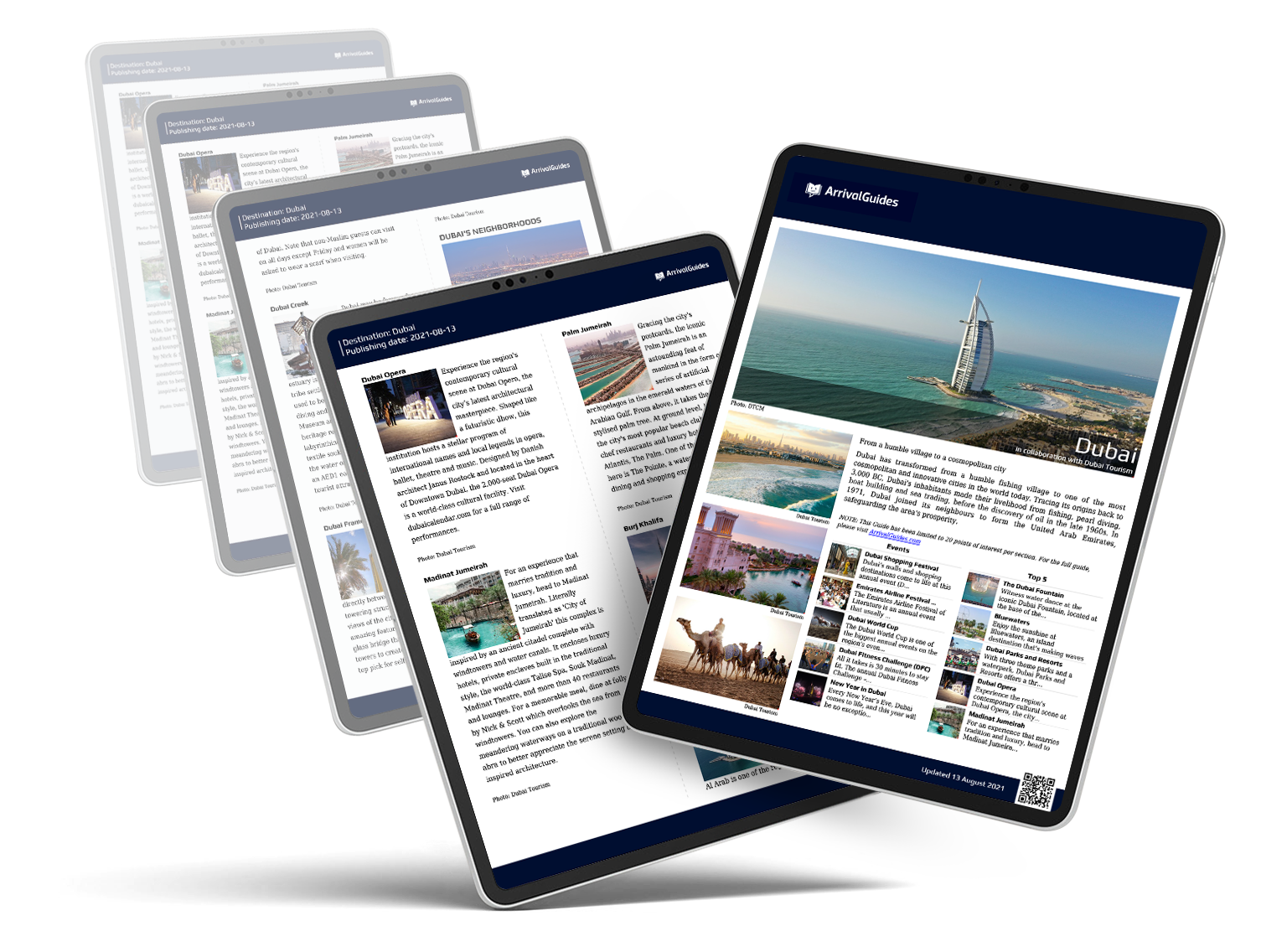
Our travel guides are free to read and explore online. If you want to get your own copy, the full travel guide for this destination is available to you offline* to bring along anywhere or print for your trip.
*this will be downloaded as a PDF.Price
€4,95
Beit Al-Sharbatly
The guide was updated:Beit Al-Sharbatly is a distinguished 1930s mansion in Al-Balad, celebrated for its ornate Hejazi architecture. Its façade is defined by elaborate rawasheen (projecting bay windows) featuring intricate mashrabiya (wooden lattice screens). Completed in 1936, the building first housed the Egyptian Embassy before being acquired by the prominent Al-Sharbatly trading family.
While the house has been restored and is admired for its almost cinematic exterior, public access can be unpredictable. The interior is not consistently open to casual visitors, so it is best appreciated from the outside.
Useful Information
- Address: Al-Matt'haf Lane, Al-Balad, Jeddah
- Website: www.instagram.com/beitalsharbatly
- Phone: +966 56 988 0566
Digital Travel Guide Download
Our travel guides are free to read and explore online. If you want to get your own copy, the full travel guide for this destination is available to you offline* to bring along anywhere or print for your trip.
*this will be downloaded as a PDF.Price
€4,95
The Jeddah Corniche is a 30-kilometre coastal pathway that functions as a primary public space for the city. It is a popular destination for evening strolls, with residents and visitors walking along the Red Sea shore. The area includes several public art installations from the Jeddah Open-Air Museum. The King Fahd Fountain, one of the tallest in the world, is a prominent landmark along the waterfront. The atmosphere is particularly lively around sunset, when the light over the water draws larger crowds.
Read more
Al-Balad — Jeddah Historic District
Jeddah’s origins trace back to ancient times, with its significant development occurring in the 7th century. It began as a fishing village and grew over the centuries. The Al-Balad neighbourhood, one of the city’s oldest areas, retains much of its historic charm. Here, you can find some of Jeddah’s oldest and most architecturally significant buildings, many constructed from traditional coral stone and intricately carved wooden elements.
Read more
Beit Nassif Museum
Beit Nassif stands as one of Al-Balad’s most significant restored coral houses, a 19th-century merchant’s mansion that later served as a royal residence for King Abdulaziz. Its Ottoman-inspired design includes distinctive bay windows and ramps built for camel messengers to access the upper floors. The interior reveals grand rooms and a library, while a 130-year-old neem tree — once Jeddah’s only tree — guards the entrance.
Visiting can be a logistical exercise; access is not always straightforward, and some areas, like the rooftop terrace with its panoramic views, may be closed without notice. It’s wise to call ahead to confirm opening times and avoid a fruitless journey.
Read more
Al-Rahma Mosque
Often referred to as the Floating Mosque or Masjid Al-Rahmah, this architectural marvel is known for its stunning white marble exterior. Perched on the edge of the Red Sea, it creates a mesmerising illusion of floating, particularly when lit up at night. This picturesque mosque is not only a popular spot for visitors to admire its beauty but also serves as a significant place of worship for pilgrims travelling to Mecca.
Read more
Al Taybat International City Museum of Science & Information
Tayebat Museum offers an extensive overview of Jeddah’s history and heritage, covering around 2,500 years. It features exhibits on pre-Islamic history, various pre-modern civilisations, and the rich Islamic cultural heritage of the city. The museum complex also includes a mosque and the façade of a historic castle.
Read more
Beit Al-Sharbatly
Beit Al-Sharbatly is a distinguished 1930s mansion in Al-Balad, celebrated for its ornate Hejazi architecture. Its façade is defined by elaborate rawasheen (projecting bay windows) featuring intricate mashrabiya (wooden lattice screens). Completed in 1936, the building first housed the Egyptian Embassy before being acquired by the prominent Al-Sharbatly trading family.
While the house has been restored and is admired for its almost cinematic exterior, public access can be unpredictable. The interior is not consistently open to casual visitors, so it is best appreciated from the outside.
Read more
Al-Shafi'i Mosque
Al-Shafi'i Mosque is one of the oldest mosques in Jeddah, with foundations dating to the earliest centuries of Islam. While much of the current structure reflects 16th-century Ottoman style, its historic mihrab (prayer niche) is believed to be nearly 1,400 years old. The mosque is named after Imam Al-Shafi'i, a foundational scholar of Sunni Islamic jurisprudence.
The building has been carefully restored, revealing intricate carvings and vibrant colour details. Non-Muslim visitors are welcome to enter outside of the five daily prayer times. Appropriate attire is required, and shoes must be removed before stepping onto the carpeted prayer areas.
Read more
Bayada Islands
The Bayada Islands form a chain of small coral formations in the Red Sea, roughly a 40-minute boat journey from Jeddah. Known for their clear, shallow turquoise waters and surrounding reefs, they are a popular local destination for snorkelling and diving. Several operators in Jeddah run day trips to the area, typically lasting around six hours and often including opportunities for swimming and water sports.
While the "Maldives of Jeddah" nickname suggests a certain level of tropical splendour, the islands are best appreciated for their accessibility and the chance they offer to experience the Red Sea's marine environment on a half-day excursion.
Read more
Al-Shallal Theme Park
Al-Shallal Theme Park is a large amusement centre along Jeddah's North Corniche. The park is divided into indoor and outdoor sections, with a mix of attractions that include an ice-skating rink, a boat ride through a simulated rainforest, and various electronic game arcades. Its outdoor area has several thrill rides, including a prominent rollercoaster, a free-fall tower and a slingshot.
A notable feature is a zero-gravity simulation ride. The park also houses a small space-themed exhibit. As a popular local destination for families and groups, it offers a range of activities from gentle rides and a toddler play area to more intense attractions.
Read more
King Abdullah Sports City Stadium
King Abdullah Sports City Stadium, often called "The Shining Jewel", is Saudi Arabia's largest stadium, with a capacity for over 60,000 spectators. Located north of Jeddah, it serves as the home ground for the prominent Al-Ittihad and Al-Ahli football clubs and is designed to host major international events. Its architecture incorporates geometric Islamic patterns and functions like a modern mashrabiya, providing shade and ventilation in the coastal climate.
The stadium is the centrepiece of a larger sports city that includes an indoor arena, practice pitches and tennis courts. While primarily a sports venue, it has also hosted international wrestling and music concerts, establishing itself as a key multipurpose arena.
Read more
TeamLab Borderless Jeddah
TeamLab Borderless in Jeddah is a digital art museum where projected artworks extend beyond individual rooms, creating a continuous, immersive environment. Created by the international art collective teamLab, the exhibition features interactive installations that respond to the presence of visitors, with light and imagery flowing seamlessly from one space to another.
The experience is designed for exploration without a set path. The second floor is particularly geared towards younger visitors, with physical, climbable structures. As the displays shift and evolve, no two visits are precisely the same, encouraging guests to wander and discover the connections between the works.
Read more
Red Sea International Film Festival
The Red Sea International Film Festival (RSIFF) is an annual event, established to support the development of a film industry in Saudi Arabia. Launched in 2019, its primary focus is on new storytelling and emerging talent from Saudi Arabia, the Arab world, Asia and Africa. The festival’s main initiatives include the Red Sea Fund for financing projects and the Red Sea Souk, a dedicated industry market.
Held in the historic Al Balad district, the festival presents a programme of international and regional films. It functions as a key platform for connecting local filmmakers with the global industry.
Read more
Darat Safeya Binzagr
Darat Safeya Binzagr is a distinctive cultural institution in Jeddah, founded in 2000 by the pioneering Saudi artist. Housed within her former family home, the museum offers an intimate glimpse into her five-decade career, showcasing paintings that vividly document a vanishing Saudi heritage. The collection extends beyond her artwork to include historical artefacts, traditional costumes, and a private library. More than a gallery, the Darat functions as an active cultural platform, hosting workshops, lectures and events designed to inspire new generations of artists and preserve the nation's visual history.
Read more
King Fahd's Fountain
Located just off the Corniche in the waters of the Red Sea, King Fahd's Fountain is the tallest of its kind in the world. The water reaches an impressive height of 312 metres. No walk along the Corniche would be complete without stopping to admire it.
Read more
Fakieh Aquarium
For a look at the rich sea life in the area and around the world, check out the Fakieh Aquarium. It showcases a wide range of aquatic species, including turtles, sharks, an array of colourful fish and many more forms of marine life — the dolphin show should not be missed.
Read more
City Gates
Jeddah’s historic walls were constructed in the 16th century to protect the city from potential attacks, including those from the Portuguese. While the majority of the original wall has not survived, several of the impressive gates and watchtowers remain and are notable landmarks within the city. These gates, such as Bab Makkah and Bab Jadid, are particularly striking when illuminated at night.
Read more