Explore a world of possibilities.

Pisa

Pisa

Pisa is strategically located in the central part of Italy, at only 12 km from the Ligurian Sea, 20 km from the harbour of Livorno and the ferries heading to the Elba Island, Sardinia and Corsica, and 80 km from Florence. This city is most known for its leaning tower, but it also preserves Piazza dei Miracoli, a UNESCO World Heritage Site, its medieval centre, numerous masterpieces of architecture and medieval history. The area around Pisa is also excellent for farm holidays, trekking, beaches and water sports on the Versilian coast.
Read more
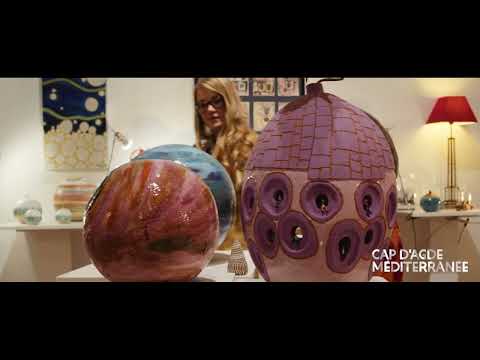
Autumn and winter colours
Le Cap d'Agde Méditerranée, France

Autumn and winter colours

Discover the destination with all the gorgeous colours of autumn, it is also a place worth discovering.
Read more
Ghent

Ghent

Ghent is a compact, authentic city where the past and present co-exist in perfect balance. Walking through the city is like travelling through time: you turn the corner and just like that, you go from the fourteenth century to the twenty-first. In Ghent pounds the young heart of a cultural city filled with music, theatre, film and visual arts. Because of its central location in Flanders, Ghent is an ideal operating base to visit the Flemish Art Cities. Ghent is ready to welcome you with open arms!
Read more
Five Days in Dubai
Dubai, United Arab Emirates

Five Days in Dubai

The sun always shines in Dubai, ensuring endless fun on every holiday. Spend your days lounging at the beach, dining at celebrated restaurants, shopping at al fresco districts and immersing yourself in the city’s cultural best. Our itinerary presents thrills for all ages and settings that inspire.
Read more
Three Days in Dubai
Dubai, United Arab Emirates

Three Days in Dubai

Whether you’re new to Dubai or a seasoned expert, our city always has surprises in store. Explore sky-high landmarks, charming waterside spots and cultural gems aplenty. Or go off the beaten track to hike in Hatta’s mountains, camp under the stars and create memories to last a lifetime.
Read more
The Castle of the Counts
Ghent, Belgium

The Castle of the Counts

A weekend trip to Ghent is simply not complete without a visit to the mysterious ‘Castle of the Counts’. This important sight in Ghent is a castle with a very turbulent past, closely intertwined with the complex—often stormy—political and social history of the city. It is the only remaining mediaeval castle with a moat and largely intact defence system in Flanders. Your visit to the Castle of the Counts will give you a complete picture of heraldic culture in the 12th century. The gatehouse, ramparts, keep, count’s residence and stables are open to visitors. Be sure to go up the long spiral staircase to the museum of torture devices on the top floor of the Castle of the Counts. Here, you will find a unique collection of instruments for torture and coercion, as well as a collection of weapons. The Castle of the Counts also hosts all kinds of cultural activities, events and activities, for example during the Ghent Festivities. It is also a popular place to get married for Ghent’s locals. Let’s not forget the time the Castle of the Counts was occupied by protesting students in 1949! Explore the castle during your weekend trip in Ghent and find out all about the ‘Battle of the Castle of the Counts’. The keep, symbol of the Counts’ power Go back in time inside this majestic fortress. Its history goes back to the time of the Roman occupation, when there was already a settlement on a sand bank by the River Lys. After a brief period of Viking plundering, the Counts of Flanders converted the earlier wooden constructions into a keep (living quarters) in the Middle Ages, with ramparts built entirely of stone, replete with 24 towers. The imposing building with its military architecture was a symbol of the Counts’ power in the turbulent city of Ghent. Do you want to dig deep into the history of Ghent? This is where you need to be. Ghent, full of charming history and modern vibrancy.
Read more
Los Cabos

Los Cabos

Located at the southern tip of the Baja California peninsula, the once secluded area of Los Cabos has transformed itself into a popular international resort destination. Tourists flock to the region for its stunning beaches and the Corridor, a 33km strip connecting the twin towns of Cabo San Lucas and San José del Cabo. Los Cabos is also the host of several well-known international events such as the Bisbee Black, the Billfish tournament and the SCORE Baja 1000 off-road race.
Read more
Innsbruck

Innsbruck

A well preserved, colonnaded medieaval old town with its world renowned Golden Roof. Right next to this there's a brightly coloured, sparkling imperial palace, the Hofburg - baroque and monumental. A stone’s throw away is the Hofkirche, a court church containing larger-than-life bronze statues, the Schwarze Mander, standing guard around the (empty) tomb of Emperor Maximilian I., a truly breath-taking sight and unique in Europe. High above this superb architecture towers the Nordkette, a magnificent mountain range between 2300 and 2500 m.
Read more
Old St Elizabeth Beguinage
Ghent, Belgium

Old St Elizabeth Beguinage

The beguinages of Flanders and the Netherlands are always oases of calm and stillness, where you might still expect to see an old beguine mumbling her prayers in a doorway. Two of Ghent’s three beguinages have been included on the UNESCO World Heritage list. Although the Old St Elizabeth Beguinage, in Begijnhofdries in Ghent, is no longer enclosed by a wall, making it simply part of the city, it still has a unique atmosphere. Today the Old St Elizabeth Beguinage is known as ‘holy corner’, a place of religious tolerance, because it has no less than three different churches: one is Roman Catholic, one is Orthodox and the other is Protestant. From bleachfield to orchard This open beguinage grew into something of a ‘beguine city’ in the 13th century, with a church, the ‘Grootjuffer’s House’, an infirmary, a chapel, more than a hundred houses for beguines, a bleachfield (a field where linen was laid out to bleach) and an orchard. After the French Revolution, with increasing industrialisation, the inhabitants moved to their new beguinage in Sint-Amandsberg in 1873.
Read more
Cathedral of Barcelona
Barcelona, Spain

Cathedral of Barcelona

The Cathedral of the Holy Cross and Santa Eulàlia, or simply the Barcelona Cathedral, is the Gothic cathedral and seat of the Archbishop of Barcelona. Its construction began in 1298 on the site of an ancient Roman temple and took more than 150 years to be completed. Located in the centre of the historic Gothic Quarter of Barcelona, the cathedral is dedicated to the martyr Santa Eulàlia – the patron saint of Barcelona – who was tortured to death in late Roman times. Her corpse is buried under the main altar. Be sure to climb to the roof for a nice view of the city, and don't forget to visit the serene and beautiful courtyard, which is occupied by thirteen white geese representing the years of Saint Eulalia's life before she was martyred.
Read more
San Rossore Natural Park & Estate
Pisa, Italy

San Rossore Natural Park & Estate

The picturesque regional park covers over 23,000 hectares along the coast from Viareggio to Livorno. The grounds feature estates and historic buildings and forested walking trails. You will come across organic farms, apiaries, an archeological area, the Navicelli canal and multiple natural reserves with distinct natural environments. Of course, there is a beach area to swim and cool down after a hike. You can find handy booklets and brochures at the Visitor Centre of Cascine Vecchie. The official website has an exhaustive list of attractions and their opening hours, plus a list of official guides.
Read more
Basilica de Santa Maria del Mar
Barcelona, Spain

Basilica de Santa Maria del Mar

The Basilica de Santa Maria del Mar is one of Barcelona’s most stunning churches and a prime example of Catalan Gothic architecture. Its design showcases a cleaner, more restrained style compared to the elaborate ornamentation typically associated with Gothic structures. Construction began in 1329 and was completed in 1383—an impressive feat for such a monumental project. Inside, the basilica feels remarkably spacious and airy, with its three naves of equal height supported by towering, slender pillars. The sparse decoration of the chapels enhances this sense of openness. Natural light filters through the magnificent rose window on the main façade and the vibrant stained glass windows, bathing the interior in a serene glow.
Read more