
-
Provided by: Simona Sergi/unsplash
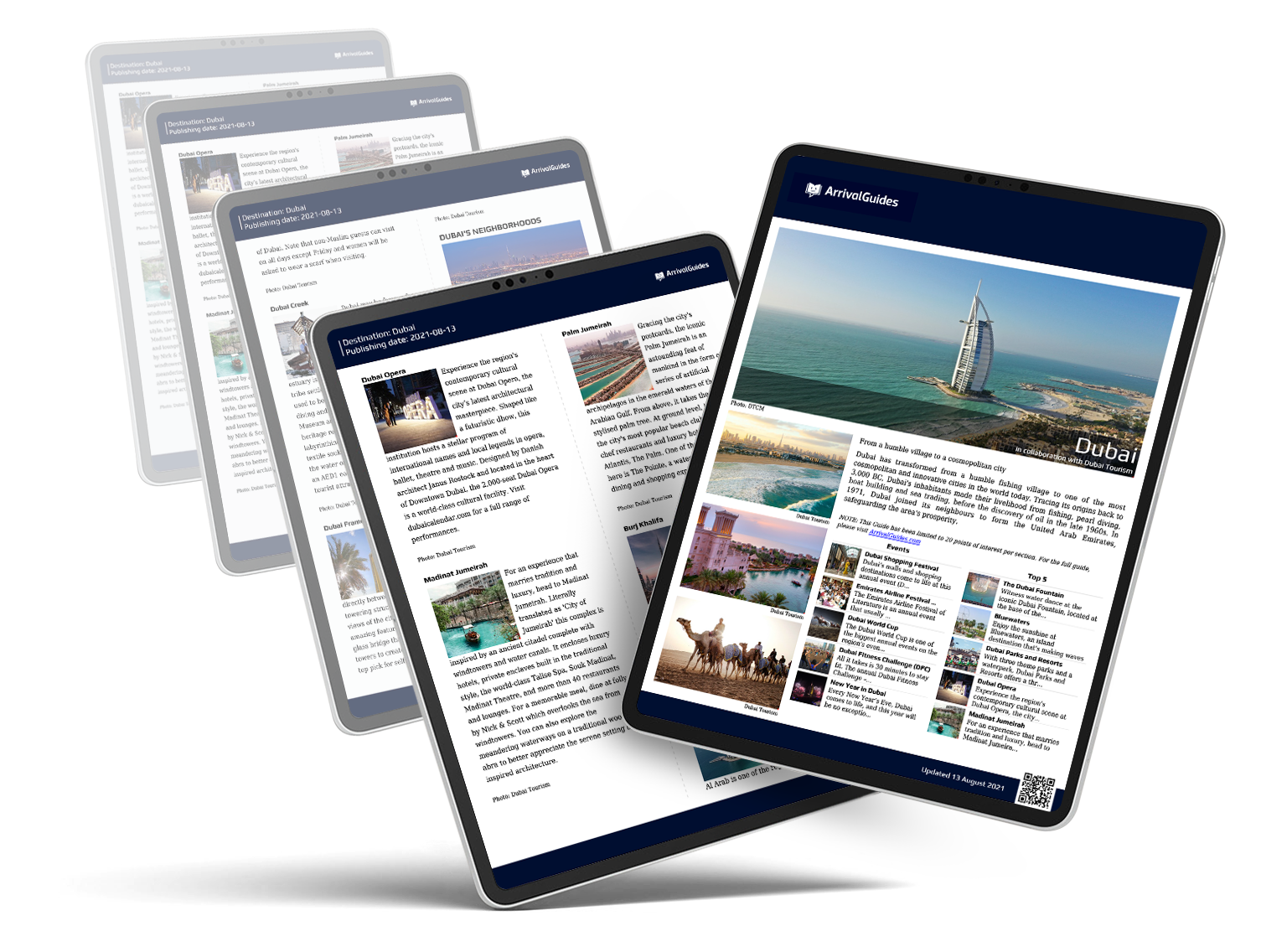
Our travel guides are free to read and explore online. If you want to get your own copy, the full travel guide for this destination is available to you offline* to bring along anywhere or print for your trip.
*this will be downloaded as a PDF.Price
€4,95
Post
The guide was updated:As in most major cities, post offices are conveniently located throughout Beijing, providing travellers with services such as sending letters and parcels, purchasing stamps, and basic banking functions. Green metal mailboxes are commonly found near street corners, in front of residential complexes, or by small shops.
Operating hours vary by branch, but major post offices usually open around 8 am and close by 6 pm, sometimes staying open on weekends. For international shipping, China Post handles everything from small parcels to faster EMS delivery, with tracking available.
Useful Information
- Address: Qianmen Post Branch Bureau - 98 Qianmen Street, Dongcheng, Beijing
Digital Travel Guide Download
Our travel guides are free to read and explore online. If you want to get your own copy, the full travel guide for this destination is available to you offline* to bring along anywhere or print for your trip.
*this will be downloaded as a PDF.Price
€4,95
The Beijing Capital International Airport (PEK) is located approximately 32 kilometres northeast of Beijing's city centre. This is the busiest airport in Asia and one of the busiest in the world.
The Airport Express Train is the fastest and most convenient option, connecting Terminal 3 and Terminal 2 to Dongzhimen Station in downtown Beijing in about 20 minutes. Taxis offer a more direct route, taking 45 minutes to an hour depending on traffic. For a budget-friendly choice, the Airport Shuttle Bus provides multiple routes to various parts of the city, taking about an hour.
Read more
Beijing Daxing International Airport (PKX)
Beijing Daxing International Airport (PKX) is located around 46–50 km south of Tiananmen Square; depending on traffic, expect a taxi or ride-hail into central Beijing to take about 60 to 90 minutes.
The most efficient public-transport option is the Daxing Airport Express. It runs from the terminal about every 9–15 minutes and takes around 22 minutes to reach Caoqiao Station, where you can transfer to Subway Lines 10 or 19. Alternatively, shuttle buses operate from the airport to key spots in the city; a journey takes roughly 80 minutes.
Read more
Best Time To Visit
Most of Beijing's attractions feature timeless architecture and rich cultural heritage, making them enjoyable year-round. However, the outdoor temperatures are most pleasant in spring and autumn, as winter can be too cold and summer too hot for comfort. Additionally, the city’s parks and gardens are particularly beautiful during these seasons, with blossoming flowers in spring and vibrant foliage in autumn.
It's best to avoid Chinese public holidays, especially from October 1st to 7th, when the city is crowded with local tourists.
Read more
Public Transport
Subway
The subway is the quickest way to move around Beijing and avoid traffic. The network is extensive, with more than twenty lines in operation, and covers most major sights. Trains generally run from around 5 am to 11 pm, depending on the line. Stations are easy to spot; look for the blue “D” symbol. Signs and announcements are in both Chinese and English.
Buses
Buses reach parts of the city that the subway doesn’t, including many suburban areas. Services usually run from about 5 am to 11:30 pm. Apps such as Beijing Public Transport or Ruubypay make it much easier to plan routes.
Yikatong Card
The Yikatong is Beijing’s transport smartcard and works on the subway, buses, some taxis, and even public bikes. You can buy and top it up at service counters and machines in most stations. A small deposit is required, and you can return the card for a refund at designated stations. For travellers, the physical card is usually the simplest option.
Read more
Mobile Payments
In China, mobile payment apps such as Alipay, Weixin Pay, and UnionPay are widely used and accepted almost everywhere, including restaurants, shops, street food stalls, and tourist attractions. To use them, you can link your international credit card or set up a local bank account.
Both apps provide features in English and are user-friendly, making it easy to handle payments, split bills, and even pay for transportation. Download these apps before your trip and familiarise yourself with their functionality to enhance your travel experience in Beijing.
Read more
Taxi
Taxis are easy to find in Beijing and a reliable way to get around the city. Most drivers speak little to no English, so having your destination written in Chinese will be quite helpful.
All official taxis should use a meter. If a driver hesitates to turn it on, politely insist or choose another cab.
Ride-hailing apps are widely used in the city. Didi is the most popular option, and you can usually use it with an international credit card, though having mobile data is essential. It’s often easier than flagging a cab on the street, especially during rush hour or late at night.
Read more
Internet Access & VPN in China
Because of the internet security laws of China, certain websites and apps are not accessible from the mainland, which includes those very commonly used in the West (Facebook, Instagram, X, Google and Gmail, Skype, among others). Some travellers have been able to gain access to those via a VPN service installed prior to arrival in China.
Make sure you comply with local laws and regulations when deciding on whether or not to employ a VPN, and which one to choose. If you do, only use those explicitly allowed by the Chinese government, and only use them for authorised purposes to avoid any trouble. There have been reports of foreigners in China getting their cell service cut off in response to unauthorised use of VPN; restoring cell service required a trip to the local police station, where the contents of the device were investigated and certain apps removed.
Given that Google is banned in China, Google Maps might not be the most accurate and reliable source of information. Some local apps, such as Baidu Maps, tend to work better than Google Maps.
Read more
Post
As in most major cities, post offices are conveniently located throughout Beijing, providing travellers with services such as sending letters and parcels, purchasing stamps, and basic banking functions. Green metal mailboxes are commonly found near street corners, in front of residential complexes, or by small shops.
Operating hours vary by branch, but major post offices usually open around 8 am and close by 6 pm, sometimes staying open on weekends. For international shipping, China Post handles everything from small parcels to faster EMS delivery, with tracking available.
Read more
Pharmacy
Pharmacies in Beijing are easy to spot once you know the signs: look for the green medical cross or the characters 药店 (yàodiàn). Large chains, such as Golden Elephant and Watsons, are commonly found throughout the city. They stock a mix of Western over-the-counter medicines, Chinese traditional remedies, and basic health products.
For prescription medication, it’s best to go directly to a hospital or an international clinic pharmacy, since many local pharmacies won’t accept foreign prescriptions and may not stock the exact brands you are used to. Certain medicines, such as antibiotics, may require a local prescription and ID registration. To be safe, bring enough of any essential medication from home, packed in its original box with a copy of your prescription.
Read more
Electricity
Mainland China uses a standard voltage of 220V with a frequency of 50Hz. Power plugs and sockets are mainly of types A, C, and I. Type A plugs have two flat parallel pins, Type C plugs have two round pins (the same as those widely used across Europe), and Type I plugs feature three flat pins in a triangular arrangement.
Read more
Telephone
Country code: +86
Area code: 10
Read more