
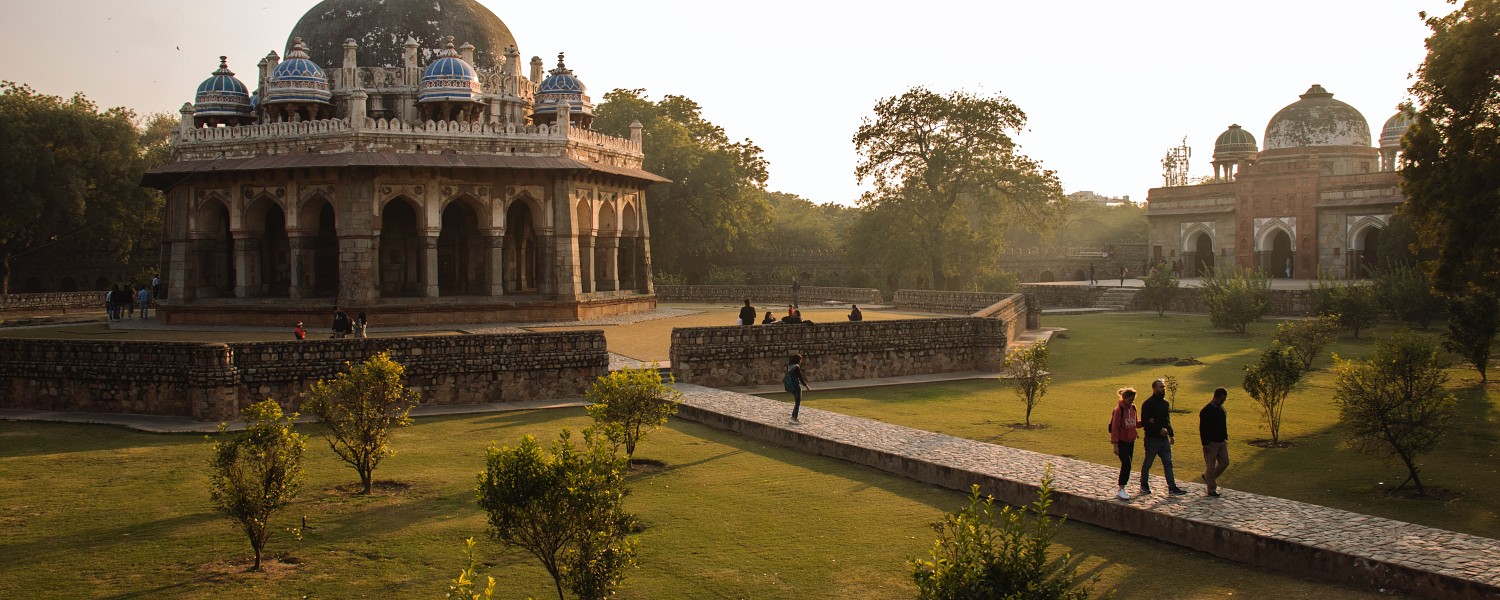


New Delhi - Do & See
Bahai Lotus Temple
The Lotus Temple, finished in 1986, is open to everyone regardless of religion. As under the Bahá’í laws it should be a place for worship of all religions whitout denominational restrictions. No sermons are delivered here and there are no ritualistic ceremonies practiced, only quiet prayers in any form or language. It is a place for meditation and peace and you can stroll in the shady garden while marvel the beautiful architecture.
The Red Fort (lal Quila)
This pinnacle of Delhi’s Mughal architecture stands near the Yamuna River in Old Delhi, its sandstone walls glowing red in the sun. This centre of pre-British Islamic India still exudes the power and majesty of those times.
Qutb Minar
The huge tapering tower of Qutb Minar to the south of New Delhi is a UNESCO world heritage site and one of the finest examples of the Afghan architecture that sprang up in Islamic India from 1193, and rising to 73 metres high.
Jama Masjid
Built by the Islamic ruler Shah Jahan, to complement his new Red Fort nearby, and completed in 1658, the Jama Masjid is the largest mosque in India, with an awesome open courtyard with room for 25,000, as well as a vast dome and two minarets.
The National Museum
Situated in the heart of New Delhi, this museum holds exhibits from throughout Indian history, including relics of the Indus Valley civilisation, sculptures from the Mauryan civilisation, South Indian Vijayanagar artifacts and a Buddhist gallery.
Humayun’s Tomb
This incredible UNESCO-listed tomb, built by Haji Begum, wife of the second Mughal emperor Humayun, is an early example of the exquisite Islamic style that reached its culmination in the most famous tomb on earth, the Taj Mahal.
Chandni Chowk
This is the main artery of Old Delhi, running from the Fatehpuri Masjid (mosque) in the west, to the Red Fort in the east. This is the most crowded, colourful and cacophonous bazaar in the whole of Delhi – a wonder to delve into by rickshaw.
Old Fort (purana Qila)
This massive fortress with three gateways stands on the site of the ancient city of Indraprastha, mentioned in the Mahabharata Hindu text, and is the oldest part of Delhi. The fort was completed by the ruler Sher Shah in the mid - 16 th century.
Connaught Place
This is the epicentre of the vision drawn up by Lutyens when the British decided to build a new imperial capital at Delhi in 1911. The colonnaded double circle of Connaught Place has a classical European air, with seven streets radiating off it.