Beijing

China

Beijing

Provided byHung Chung Chih/Shutterstock
PDF Guide

Our travel guides are free to read and explore online. If you want to get your own copy, the full travel guide for this destination is available to you offline* to bring along anywhere or print for your trip.

*this will be downloaded as a PDF.

Price

€4,95

Do & See

Beijing is a city of layers. Ancient palaces and temples sit alongside quiet hutongs and lakes, while contemporary art districts and bustling shopping streets show a very different side of life. The Great Wall is never far from anyone’s itinerary, but within the city, there’s a mix of history, culture, and everyday rhythm that keeps each walk, each street, each park feeling a little different.
Great Wall of China

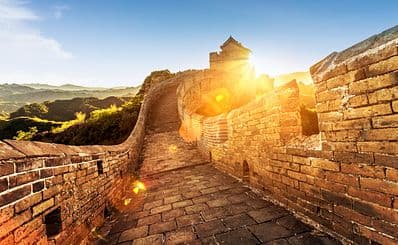
Great Wall of China

Undoubtedly one of the world’s top tourism destinations — and officially one of the New Seven Wonders of the World — the Great Wall stretches for thousands of kilometres across northern China. From Beijing, the easiest section to reach is Badaling, about 70 km from the city. It’s well restored and has a cable car, but it also draws the biggest crowds. Mutianyu is another popular choice with fewer tour groups if you go early. For a wilder feel, head to Simatai or Jinshanling, where much of the wall is original and the hikes are longer. Huanghuacheng is partly submerged by a reservoir, so you get the unusual sight of watchtowers half surrounded by water.

Do & SeeRead more →
Tiananmen Square

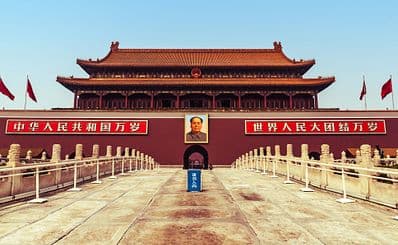
Tiananmen Square

Tiananmen Square is where Mao Zedong announced the founding of the People’s Republic of China in 1949. The square is dominated by the red Tiananmen Gate and Mao’s enormous portrait, which you’ll see everywhere. Every morning at sunrise, there’s a flag-raising ceremony, and on the first day of the month, it’s done with a military band. The square is also home to the Monument to the People’s Heroes, a 38-metre granite obelisk in the centre, and the Mausoleum of Mao Zedong, where people still queue to pay respects.

Do & SeeRead more →
Forbidden City

Forbidden City

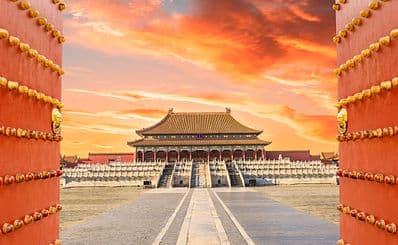
Once home to China’s emperors, the Forbidden City has more than 800 buildings and nearly 10,000 rooms. This vast imperial household opened to the public in 1949, and it’s remarkably well-preserved. The Hall of Supreme Harmony, covered in thousands of dragon motifs, hosted grand ceremonies, while the Palace of Heavenly Purity was where emperors lived, with bedrooms and private halls. Walking through the courtyards and along the red walls, it’s easy to feel the scale and ritual of life here.

Do & SeeRead more →
Summer Palace

Summer Palace

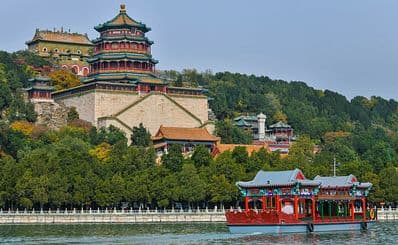
Built in the mid-18th century for the Qing emperors as a retreat from the heat of the Forbidden City, the Summer Palace is a vast imperial garden centred on Kunming Lake and Longevity Hill, both man-made. The lake was modelled on Hangzhou’s West Lake, with islands, bridges, and long covered walkways. Scattered around are pavilions, temples, and a recreated riverside street designed to look like a traditional market town. Later restored under Empress Dowager Cixi, it became her favoured residence. Today, it’s worth visiting not just for the palaces themselves, but for the long lakeside walks, shaded courtyards, and the sense of space that feels very different from central Beijing.

Do & SeeRead more →
Temple of Heaven

Temple of Heaven

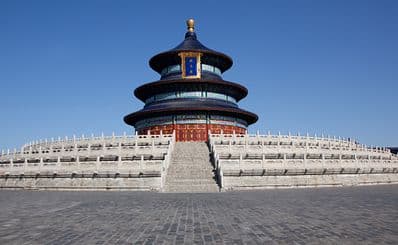
Built in the early 1400s, around the same time as the Forbidden City, the Temple of Heaven was where emperors prayed for good harvests. The vast park contains several ceremonial buildings, the most striking being the Hall of Prayer for Good Harvests with its blue-tiled roof and intricate wooden ceiling. The original hall was destroyed by lightning in 1889 but rebuilt soon after. Other highlights include the Hall of Abstinence, where emperors fasted before rituals, and the Circular Mound Altar — a three-tiered marble platform symbolising heaven itself. Today, the park is as much about everyday life as it is about history: locals gather here in the mornings for tai chi, dancing, and music.

Do & SeeRead more →
Lama Temple (Yonghe Temple)

Lama Temple (Yonghe Temple)

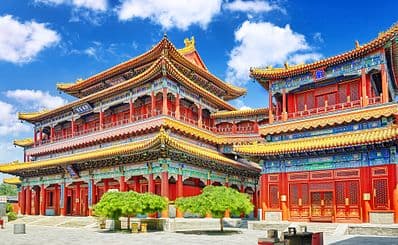
Built in 1694 as the residence of the future Yongzheng Emperor, the site was later converted into a Tibetan Buddhist monastery and remains one of the most important of its kind outside Tibet. The complex is a series of richly decorated halls and courtyards filled with incense smoke and prayer wheels. Inside the Falun Dian stands a bronze statue of Tsongkhapa, founder of the Gelug (Yellow Hat) school. The highlight for many is the towering 18-metre-tall Maitreya Buddha carved from a single piece of sandalwood, housed in the Wanfu Pavilion.

Do & SeeRead more →
View all Do & See