Christmas Island

Australia

Christmas Island

Provided byChristmas Island Tourism Association
PDF Guide

Our travel guides are free to read and explore online. If you want to get your own copy, the full travel guide for this destination is available to you offline* to bring along anywhere or print for your trip.

*this will be downloaded as a PDF.

Price

€4,95

Scuba Diving

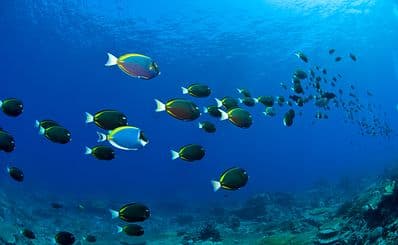
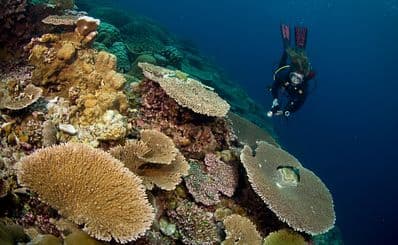
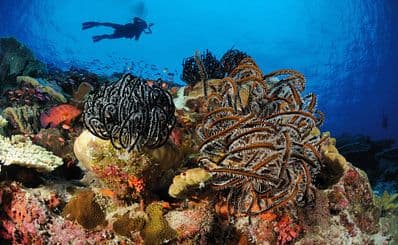
Christmas Island’s narrow fringing reef supports bountiful marine life, including 88 coral species and more than 600 species of fish. It’s an underwater wonderland for divers, with clear warm waters, coral reefs and spectacular wall dives. Soft corals, feather stars and gorgonian corals grow along vast walls which plunge into a seemingly bottomless abyss. The fish community is distinctive because the island is a meeting place for Indian and Pacific Ocean fish species – it’s one of the few locations in the world where you’ll see Indian and Pacific Ocean fish swimming side by side. Some of these species interbreed to produce hybrids. Christmas Island has more hybrid fish than anywhere else in the world, making it a marine hybridisation zone of international significance. In addition to the hundreds of species of tropical fish, dolphins inhabit the island’s waters and whale sharks regularly visit during the wet season. Whale sharks generally first appear when the red crabs are spawning at the start of the wet season — they converge to supplement their plankton diet with crab larvae. Locations such as Flying Fish Cove, Ethel Beach, Dolly Beach, West White Beach, and Winifred Beach offer scuba divers and snorkellers a rewarding marine experience. At Flying Fish Cove and Ethel Beach shore diving is possible depending on the time of the year. There is excellent fishing, with sailfish, tuna and wahoo among some of the fish to be caught. You’ll find boat ramps at Flying Fish Cove and Ethel Beach.
Perpendicular Wall

Perpendicular Wall

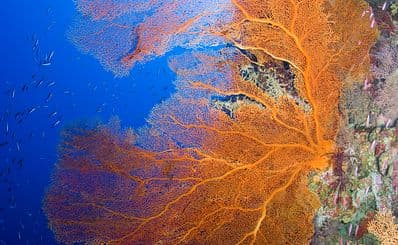
As the name of this dive site implies, here you’ll find a wall that falls dramatically away to 36 metres. Before you even descend, there’s a chance you’ll be surrounded by friendly dolphins. After you’ve said hi, descend to find an overhang full of sea fans. As the wall falls away, you’ll notice masses of coral stretching out to catch the passing currents. Schools upon schools of fish travel every which way, leaving you to capture playful fusiliers and columns of butterflyfish on your underwater camera. Don’t forget to look out into the blue! You might be lucky enough to catch a glimpse of passing sharks and rays.

Scuba DivingRead more →
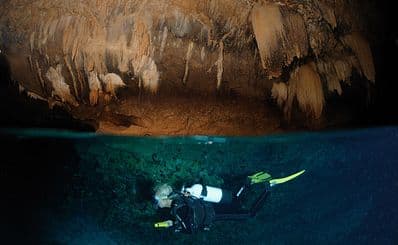
Thundercliff Cave

Thundercliff Cave

The unique geography of Christmas Island lends itself to underwater caves and caverns. One of these, namely Thundercliff Cave, is considered by many to be the best dive on the island when conditions are right. Outside the entrance of the underwater cave, stands a beautiful coral garden with flocks of resident batfish. Following the tunnel into the overhead environment, you’ll find a cathedral-like opening within. The subsequent room opens to the air above and connects to the remaining above-the-water passages, so leave your scuba gear and explore the interior of the cave.

Scuba DivingRead more →
The Morgue

The Morgue

With a morbid name for such a fantastic dive site, The Morgue is home to some of the largest corals around Christmas Island. The name itself stems from a small building on shore that previously served as the island’s morgue. Today, the underwater environment is filled with a field of bommies that leads down to the most scenic area of the site at 25 metres. Searching every nook and crannie may result in some fantastic finds, such as blue ribbon eels, nudibranchs, feather stars and gilded triggers.

Scuba DivingRead more →
Eidsvold Wreck

Eidsvold Wreck

The Eidsvold was previously a Norwegian phosphatase ship but was struck by a Japanese submarine during World War II. It was scuttled in Flying Fish Cove and later transported (dragged, really) to its ultimate resting place on the other side of Smith Point. Today, half of the Eidsvold sits between 5 and 18 metres while the other half has fallen over the edge, out of the reach of recreational divers. Because of the ship’s age, she is now home to coral colonies and the squadrons of colourful tropical fish that Christmas Island is known for. The remains of the hull can be explored by wreck divers.

Scuba DivingRead more →
Million Dollar Bommie

Million Dollar Bommie

With a huge variety of fish life on a single, concentrated area, Million Dollar Bommie shouldn’t be skipped on any dive holiday at Christmas Island. The bommie is about 7 metres high, growing up from a base at 26 metres. The huge fans and coral overhangs make for fantastic fish photography. You might spot Meyer’s butterflyfish, pigfish, red fire goby, coral trout, damselfish, fusiliers, triggerfish and rockcod. Keeping a watch out into the blue or while jumping in with snorkels after the dive, you might get a glimpse of a majestic manta ray.

Scuba DivingRead more →
View all Scuba Diving