Tunis

Tunisia

Tunis

Provided byKadagan/shutterstock
PDF Guide

Our travel guides are free to read and explore online. If you want to get your own copy, the full travel guide for this destination is available to you offline* to bring along anywhere or print for your trip.

*this will be downloaded as a PDF.

Price

€4,95

Do & See

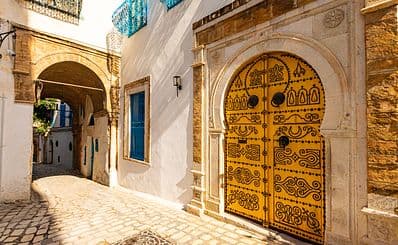
Get lost in the maze of the Medina's winding streets, occasionally stopping to marvel at the work of craftsmen or admire local art and architecture. Pay a visit to one of the former Islamic schools (many of them have been turned into cultural centers), and remember to stop for a glass of traditional hot mint tea. Only a few kilometers west of the city centre lie the coastal suburbs of Carthage, La Marsa and Gammarth, where most holiday resorts and luxury hotels are located. While La Marsa and Gammarth are known for their nightlife, Carthage (former seat of the powerful Carthaginian Empire) with its ancient Roman ruins is a must to explore for history lovers.
Medina of Tunis

Medina of Tunis

Bab al-Bhar, the monumental gateway to the Medina of Tunis, stands as a portal between eras. Once part of the old city’s defensive walls, its arch now opens onto a lively plaza where daily life unfolds. Here, children play by fountains, artisans sell traditional textiles, and tea houses hum with conversation. Beyond lies the Medina, Tunisia’s historic heart. Its narrow streets branch into specialised souqs, each dedicated to specific crafts: copper smiths hammering wares, perfumers blending oils and leather workers stitching goods. At its centre rises Al-Zaytuna Mosque, the city’s oldest and most revered site. Stalls between these hubs offer ceramics, textiles, and other handcrafted treasures. Visit mid-week to navigate comfortably. On Saturdays, the crowds can become overwhelming, and on Sundays many shops stay closed.
Do & SeeRead more →
Bardo National Museum

Bardo National Museum

The Bardo National Museum stands as Tunisia’s largest museum and an essential stop for history and art lovers. Housed in a majestic Hafsid-era palace (1228–1574), later expanded by the Ottomans, its collection ranks among the Mediterranean’s most significant — second only to Cairo’s Egyptian Museum in Africa. The museum’s Roman mosaics, unearthed during 19th-century excavations, offer vivid glimpses of ancient North African life, complemented by Punic and Hellenistic statues. A modern annexe has doubled the exhibition space, blending seamlessly with the historic palace. Guided tours come highly recommended to fully appreciate the museum’s treasures.

Do & SeeRead more →
Al-Zaytuna Mosque

Al-Zaytuna Mosque

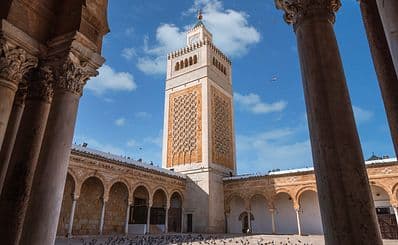
In the Medina of Tunis, every winding alley converges on Al-Zaytuna Mosque (literally the Mosque of the Olive). Founded in 734 on a former church site and rebuilt in the 9th century, it stands among the world’s oldest mosques. This cultural landmark is cherished by locals and visitors alike. The mosque’s courtyard is framed by over 200 columns repurposed from Roman Carthage, and its square Almohad-style minaret dominates the skyline. Though only Muslims may enter the prayer halls, you can admire the courtyard from Café Panorama’s terrace.

Do & SeeRead more →
Former Islamic Schools

Former Islamic Schools

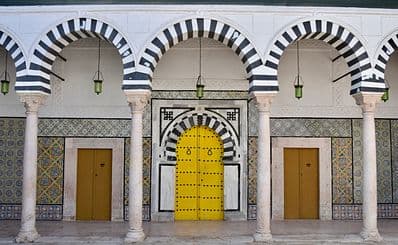
Tunis reveals its scholarly heritage through a collection of beautifully preserved madrasas, each bearing witness to centuries of intellectual pursuit. Over 20 madrasas are spread over the Medina of Tunis, some of them seven centuries old. The role these madrasas played has evolved over time. The Madrasa Slimania, founded by 18th-century ruler Ali Pasha, stands out with its ornate prayer hall and elevated entrance porch. Where student cells once housed scholars, medical professionals now work beneath the same vaulted ceilings. Nearby, the Madrasa El Bachia has transitioned from Quranic school to artisan workshops, its courtyard fountain silent but its creative spirit alive. The Madrasa Palmier (or Madrasa Ennakhla) maintains its original purpose as a centre for Quranic studies, its namesake palm still shading the courtyard behind formidable studded doors. Meanwhile, El Khaldounia represents a bridge between tradition and modernity. Established in 1896 near Souk Al Attarine, this progressive institution now serves as a bilingual library, honouring Ibn Khaldoun’s legacy of critical thought.

Do & SeeRead more →
Avenue Habib Bourguiba & Tunis Clock Tower

Avenue Habib Bourguiba & Tunis Clock Tower

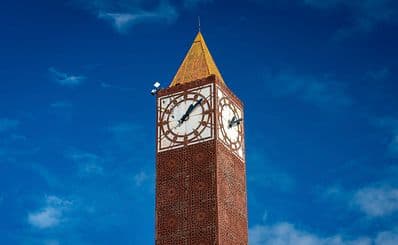
Avenue Habib Bourguiba, the grand central boulevard of Tunis, channels Parisian elegance with its tree-lined median, sidewalk cafés and historic facades. The thoroughfare, named after Tunisia’s first president, serves as a busy commercial hub and an open-air museum of 20th-century history, flanked by landmarks like the French Embassy and the neo-Byzantine Cathedral of St Vincent de Paul. Dominating the eastern end, the Tunis Clock Tower rises 38 metres above Place du 7 Novembre. Its gilded, lattice-patterned design blends modernist and traditional motifs, glowing amber after dark. Though functionally modest (locals joke about its reliability), the tower’s height and central roundabout position make it an unavoidable landmark. By day, the avenue thrums with shoppers and coffee drinkers; by evening, it becomes a stage for leisurely promenades. For visitors, it’s less about individual sights than the collective energy: the hum of conversation, the scent of orange blossoms, and the weight of history beneath your feet.

Do & SeeRead more →
Cathedral of St Vincent de Paul

Cathedral of St Vincent de Paul

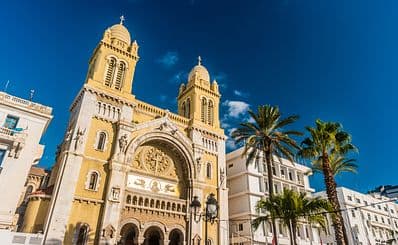
Cathédrale St-Vincent-de-Paul, a striking 1883 landmark on Place de l’Indépendance, embodies Tunis’s colonial-era architectural eclecticism. Its yellow facade blends Gothic, Byzantine and Moorish elements in a bold (if uneven) fusion overlooking the vibrant square. The cathedral shares this iconic space with the "I Love Tunis" sign, making it a prime spot for photos. Around them, Habib Bourguiba Avenue thrums with energy, reflecting the city’s layered history.

Do & SeeRead more →
View all Do & See