Marrakesh

Morocco

Marrakesh

Provided byMatej Kastelic/Shutterstock.com
PDF Guide

Our travel guides are free to read and explore online. If you want to get your own copy, the full travel guide for this destination is available to you offline* to bring along anywhere or print for your trip.

*this will be downloaded as a PDF.

Price

€4,95

Do & See

The city is split into two dramatically different areas, each a testament to a distinct period in Moroccan history. First, there's the ancient Medina, a labyrinthine quarter established almost a millennium ago by the Almoravids. Then, in stark contrast, is the Ville Nouvelle, born out of early 20th-century French colonial ambitions and modernist ideals. But it's the Medina — particularly its bustling central square, Jemaa el-Fna — that truly kindles the imagination.
El Badi Palace

El Badi Palace

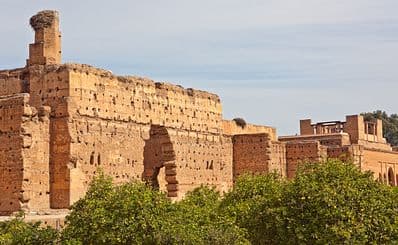
Constructed in the 16th century under the orders of Sultan Ahmad al-Mansur of the Saadian dynasty, El Badi Palace — the "Incomparable Palace" — was once hailed as a marvel of its era. Initially featuring 360 rooms, an expansive courtyard, and a 90-metre-long pool, the palace was a monument to the Sultan's affluence and influence. Adorned with a lavish selection of materials sourced globally — from Italian marble to Malian gold — the palace was envisioned as an opulent space for grand receptions and ceremonies. However, following al-Mansur's death in 1603, the palace was abandoned and gradually succumbed to decay, especially during the waning years of the Saadian rule. Many of its precious elements, particularly its marble, were harvested and repurposed in various Moroccan structures. Nowadays, El Badi stands as a significant point of interest in Marrakesh, housing various exhibitions and even showcasing the Minbar of the Kutubiyya Mosque. Though largely in ruins, the palace still whispers stories of a bygone era of wealth and grandeur.
Do & SeeRead more →
Koutoubia Mosque & Minaret

Koutoubia Mosque & Minaret

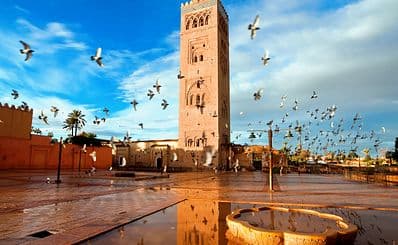
Erected in 1120, the Koutoubia Mosque and its 70-metre-tall Minaret serve as the spiritual and architectural heart of Marrakesh, framed by expansive gardens. Situated in the southwest area of Marrakesh's medina, close to the bustling Jemaa el-Fna marketplace, the mosque is not just the city's largest but also one of its most iconic. Although entry is restricted to Muslims, the mosque's exterior is an awe-inspiring sight that can be appreciated by all.

Do & SeeRead more →
Jemaa el-Fna

Jemaa el-Fna

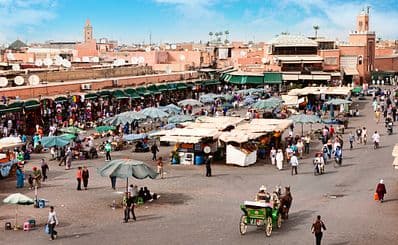
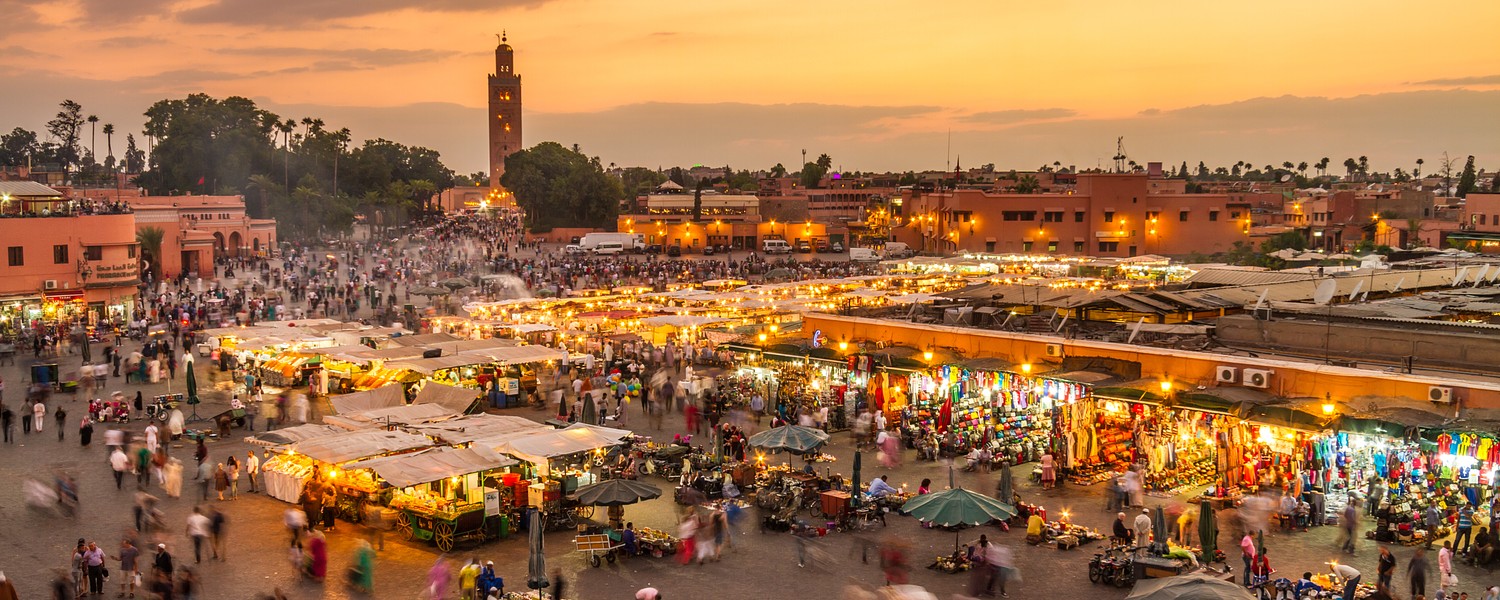
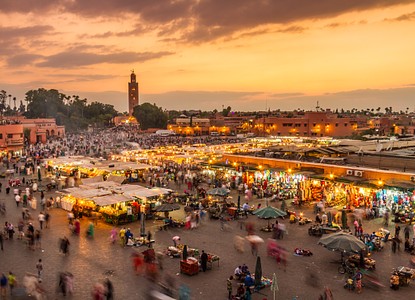
Jemaa el-Fna, the vibrant epicentre of Marrakesh's medina, is a riot of colours, sounds and scents, especially at sunset. Though the square has transitioned from its roots as a daily food market for mountain traders, its hustle and energy remain palpable. During the day, vendors offer refreshing fruit juices, but it's at dusk when the place truly transforms. Street theatre, or 'halqa,' has been a mainstay here since the 11th century, and the tradition continues in modern times. As the sun dips below the horizon, food stalls magically unfold, adding tantalising aromas to the air. Musicians tune their instruments, snake charmers enchant both serpents and tourists, and the spectacle crescendos into a nightly celebration of Marrakeshi life and culture.

Do & SeeRead more →
View all Do & See