A Walk Along the River

A Walk Along the River

Bilbao

Provided byJon Chica/Shutterstock
PDF Guide

Our travel guides are free to read and explore online. If you want to get your own copy, the full travel guide for this destination is available to you offline* to bring along anywhere or print for your trip.

*this will be downloaded as a PDF.

Price

€4,95

A Walk Along the River

A Walk Along the River
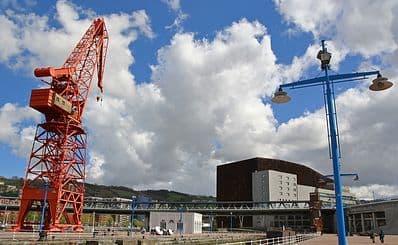
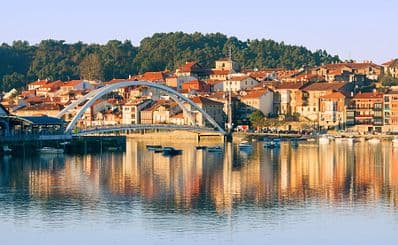
Take a stroll along the Nervión River starting at Palacio Euskalduna Jauregia, Bilbao’s modern conference and concert centre. The riverside path is lined with sculptures and impressive contemporary buildings. You’ll pass the Guggenheim Museum and cross the Zubizuri Footbridge, which connects the museum with the Ayuntamiento. It’s an easy, scenic walk that blends art, architecture, and city life in one route.

Information

    More in Do & See

    Guggenheim Museum

    Guggenheim Museum

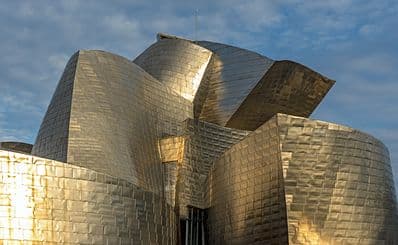
    The Guggenheim Museum Bilbao is a landmark of contemporary architecture and a cultural beacon for the city. Designed by Canadian-American architect Frank Gehry, the museum's fluid, sculptural form has been hailed as one of the most significant architectural achievements of the 20th century. Its titanium-clad curves and organic shapes have transformed the Bilbao skyline and are often likened to a ship or flower. Beyond its jaw-dropping exterior, the museum houses a world-class collection of modern and contemporary art, focusing on postwar American and European artists. Notable works include pieces by Mark Rothko, Jeff Koons, and Louise Bourgeois, among others.

    Do & SeeRead more →
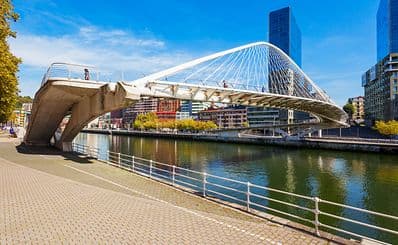
    Zubizuri Bridge

    Zubizuri Bridge

    Zubizuri, meaning 'white bridge' in Basque, is a steel-and-glass footbridge over the Nervión River, designed by Santiago Calatrava and opened in 1997. It links Campo Volantín on one side to Uribitarte on the other. The deck was originally made of translucent glass bricks, but they became dangerously slippery when wet, so now there’s a non-slip covering over much of the walking surface. From the middle of the bridge, you get a good view of the river and the Guggenheim, especially at sunrise or when the lights come on at night.

    Do & SeeRead more →
    Day Trip to Donostia - San Sebastián

    Day Trip to Donostia - San Sebastián

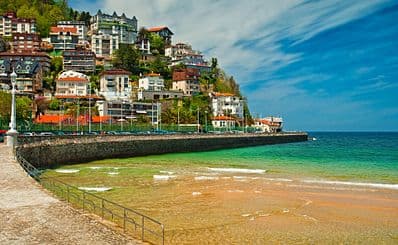
    Donostia sits between hills around La Concha Bay, with Belle Époque architecture, famous restaurants, and a seaside vibe that makes it a killer day out. The Old Town (Parte Vieja) is your pintxo ground zero with narrow streets, tiny bars, and lots to try. East of there is the Gros neighbourhood with Zurriola Beach: waves, surf shops, and a youthful crowd. Across the bay are the more sheltered beaches La Concha and Ondarreta; Ondarreta borders the Antiguo neighbourhood, which feels quieter, leafier, with classic mansions, gardens, and a calm place to stroll.

    Do & SeeRead more →
    Santiago Cathedral (Bilboko Donejakue Katedrala)

    Santiago Cathedral (Bilboko Donejakue Katedrala)

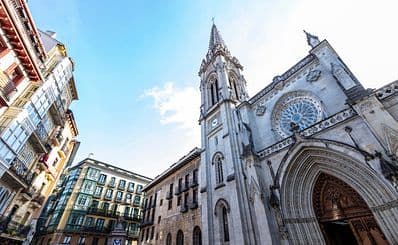
    Built from the late 14th to the 15th centuries, the Santiago Cathedral is the city’s oldest major church, dedicated to Saint James (Santiago), Bilbao's patron saint. The building features a mix of different styles: its core is Gothic (nave, vault, cloister), a grand Renaissance portico was added in the 1500s, while much of the façade and tower with spire were rebuilt in a neo-Gothic style in the late 1800s by Severino de Achúcarro. Inside, you’ll see three naves, several side chapels, the Gothic cloister accessible via the Door of the Angel ('Puerta del Ángel'), and beyond the main altar, there’s an ambulatory with chapels. Floods in 1983 caused damage, but the cathedral was restored and reopened around 2000.

    Do & SeeRead more →
    San Juan de Gaztelugatxe

    San Juan de Gaztelugatxe

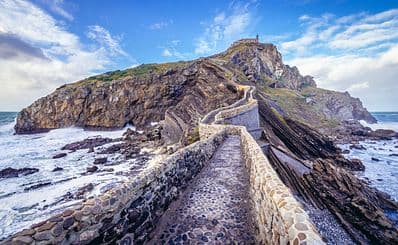
    A winding stone bridge links the mainland to this rocky islet, followed by 240 steps up to the small hermitage of San Juan de Gaztelugatxe. The chapel dates back to the 10th century, although it has been rebuilt multiple times following fires and pirate attacks. Even if the chapel is closed (which it often is), the climb is worth it for the stunning sea views, the cliffs carved into arches, and the remote, windswept feeling at the top - Game of Thrones fans will recognise the setting as Dragonstone. It’s about a 45-minute drive from Bilbao. You can also take a bus to Bermeo, a fishing town nearby, and continue by taxi or local bus. The trail is steep and uneven, so good shoes help.

    Do & SeeRead more →
    Climbing Pagasarri & Ganekogorta

    Climbing Pagasarri & Ganekogorta

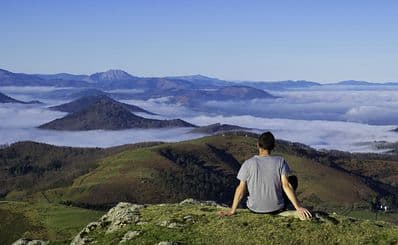
    Take a walk in the shoes of a local with one of Bilbao’s most popular hikes. Pagasarri, at 673 m, is one of the smaller mountains surrounding the city, and most locals have tackled it at least once. Buses from the city centre take you to starting points around Zabalburu or Peñascal. At the summit, there’s a bar selling bocatas—baguette sandwiches stuffed with tortilla de patata, txistorra, or chorizo. If you’re feeling ambitious, continue on to Ganekogorta at 998 m, just a bit further along the ridge, for more sweeping views of Bilbao and the surrounding hills.

    Do & SeeRead more →

    Museum of Fine Arts of Bilbao

    Museum of Fine Arts of Bilbao

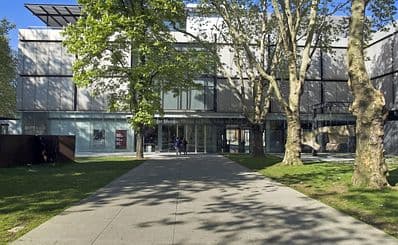
    The Museum of Fine Arts of Bilbao is one of Spain's most important art institutions. Its origins trace back to the first Fine Arts Museum, founded in 1908, and the Museum of Modern Art opened in 1924. These two museums merged in 1945, forming the current institution. The museum's extensive collection spans from the 12th century to contemporary art, featuring masterpieces by renowned artists such as El Greco, Goya, Velázquez, Picasso, and Francis Bacon. Notably, it houses the most significant collection of Basque art, including works by Regoyos, Zuloaga, and Echevarría.

    Do & SeeRead more →

    Museum of Sacred Art of Bilbao

    Museum of Sacred Art of Bilbao

    Housed in the former Convent of La Encarnación, founded in 1514 by Dominican nuns, the Museum of Sacred Art of Bilbao is the first women's convent in the city. It showcases a rich collection of over 2,000 religious artworks dating from the 12th to the 20th century, many originating from local churches and monasteries in Bizkaia. The exhibits are divided into three main sections: sculptures and paintings, gold and silver works, and liturgical garments and ornaments. Highlights include intricate silverware, devotional sculptures, and beautifully embroidered vestments.

    Do & SeeRead more →
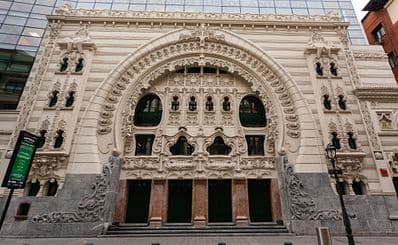
    Arriaga Theatre

    Arriaga Theatre

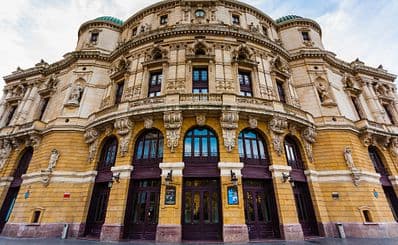
    Inaugurated in 1890, the Arriaga Theatre is a Neo-baroque opera house named after the Bilbao-born composer Juan Crisóstomo de Arriaga, often referred to as the 'Spanish Mozart'. Inspired by the Paris Opera House, it became a key cultural venue in Bilbao. The original theatre burned down in 1914 and was rebuilt, reopening in 1919. Today, it hosts opera, ballet, classical concerts, and theatre productions. Guided tours give a behind-the-scenes look at the staircases, Royal Box, and costume collection.

    Do & SeeRead more →
    The Vizcaya Bridge

    The Vizcaya Bridge

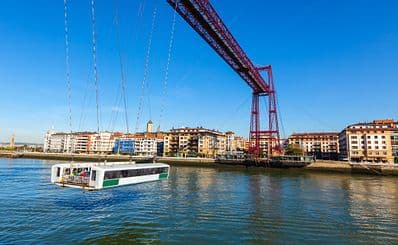
    Just outside Bilbao, in Biscay, the Vizcaya Bridge (Puente Bizkaia) — also called Puente Colgante or the Hanging Bridge — is the world’s oldest transporter bridge, completed in 1893. It connects Portugalete and Las Arenas (Getxo) across the Nervión River and was declared a UNESCO World Heritage Site in 2006. You can cross either by the gondola, which carries vehicles and passengers in about 90 seconds, or on the pedestrian walkway, accessed via lifts in the towers. The bridge stands 45 m high and 160 m long, and its iron-and-steel design was a milestone of industrial-age engineering.

    Do & SeeRead more →
    Doña Casilda Iturrizar Park

    Doña Casilda Iturrizar Park

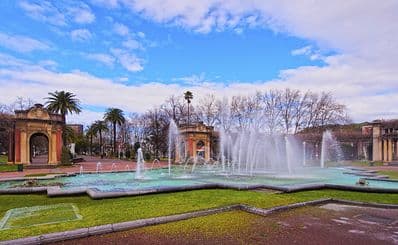
    Doña Casilda Iturrizar Park is the biggest green space in central Bilbao, built in 1907 on land donated by Casilda Iturrizar, a Spanish philanthropist. Its layout blends English-garden and French-garden styles: paths among mature trees, a botanical garden, ponds with ducks/swans/geese, fountains, a pergola, and children’s play areas. The Fine Arts Museum is situated on one edge of the park, and there’s a stage area for live performances. Locals often call it 'Parque de los Patos' (Ducks Park), and it’s open all year, day and night.

    Do & SeeRead more →
    Basilica of Begoña

    Basilica of Begoña

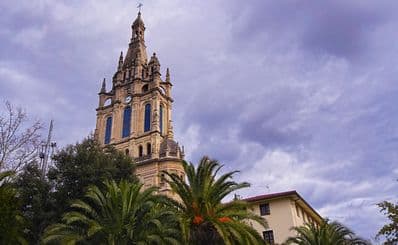
    Perched above Bilbao on Artagan Hill, the Basilica of Our Lady of Begoña was built starting in 1511 on the very spot where, legend says, the Virgin Mary appeared. The church mixes styles: mainly Gothic inside, a Renaissance front with a grand arch, and a belfry added in the early 20th century. Inside, there’s a polychrome wood carving of the Virgin of Begoña ('Amatxu' to locals) from the 14th century. Sailors often used to name their boats after her, and every 15 August (Assumption) and 11 October (Feast of Begoña), the place fills with pilgrims.

    Do & SeeRead more →
    Azkuna Zentroa - Alhóndiga Bilbao

    Azkuna Zentroa - Alhóndiga Bilbao

    Once a wine warehouse, Azkuna Zentroa is now one of Bilbao’s main cultural spaces. Inside you’ll find cinemas, galleries, a library, a gym, and even a rooftop swimming pool with a glass floor you can look up through from the atrium below. Philippe Starck, a French industrial architect, redesigned the building, adding 43 columns, each with a unique style, and open spaces that make the building an attraction in its own right. The venue’s programme ranges from art exhibitions and talks to film screenings and concerts.

    Do & SeeRead more →